 AHSN
Professional bio
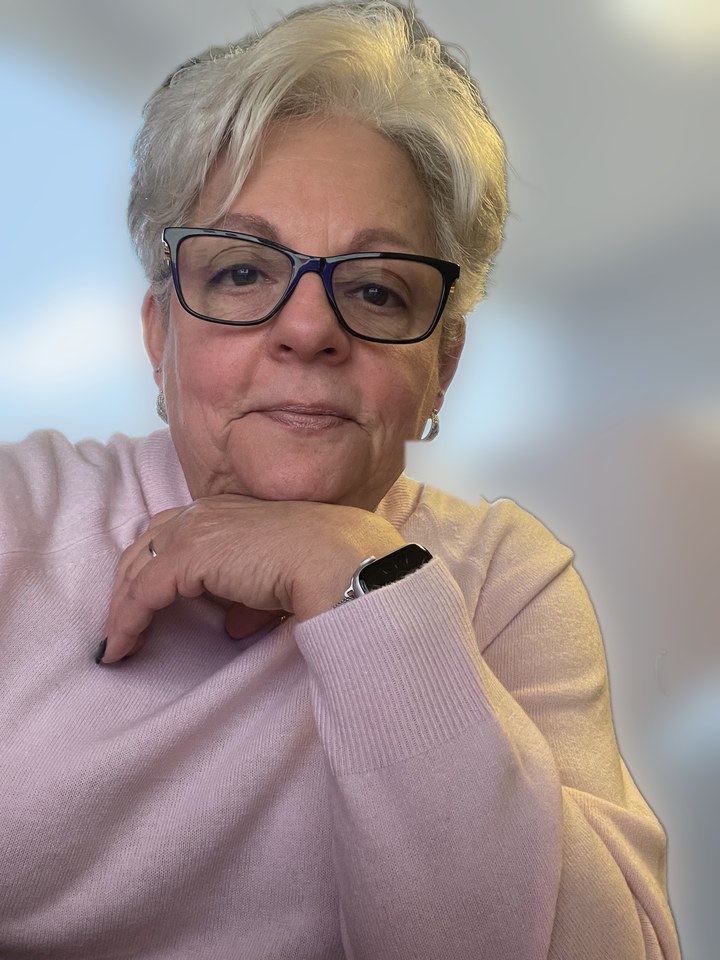
Dr. Ivelisse (Ivy) Lazzarini is an occupational therapist, scholar, and academic leader. She is the occupational therapy program director and Associate Dean of the School of Pharmacy and Health Professions at Notre Dame of Maryland University, where she is responsible for the development and accreditation of the occupational therapy doctorate. Earlier appointments include Associate Dean of Health Sciences, Founding Chair, Program Director, and Full Professor.
Integrating brain dynamics, cognitive theory, complexity sciences, and neuroscience has been her passion as a scholar. She has published in the areas of neuro-occupation, cognition, and neuroethics. As an administrator, her expertise is in curriculum development, curriculum mapping, and mentoring clinicians who aspire to enter academia.
Dr. Lazzarini earned her bachelor's degree in occupational therapy from Temple University, her first Doctorate in Occupational Therapy from Creighton University, and in 2022 earned a Doctorate in Education (EdD) from Fairleigh Dickinson University. She also completed two postdoctoral research fellowships, a master certificate in hospitality services management from Cornell University, and a master's in human systems dynamics from the HSD Institute, and she is currently a PhD candidate at Notre Dame of Maryland University. She studied complexity sciences at the New England Complex Systems Institute and the University Residential Center of Bertinoro, Italy, and completed the Management Development Program at Harvard University.
She serves on the roster of Middle States accreditors, is a past President of the Society for Chaos Theory in Psychology and the Life Sciences and has been a founding member of the editorial board of Building Healthy Academic Communities since 2016.
Humanness is shaped by our lived experiences, which form the patterns of neural activity that dictate our everyday tendencies.
My journey
I am also a person living with hydrocephalus and a shunt. AHSN grew out of both parts of my life: what I know as a clinician and educator, and what I have lived as a patient.
Long before anyone looked at my brain
As a child I never had good balance or a good sense of where my body was in space. My eyes were not well lined up, and my feet were not straight. My siblings were terrified to lend me their bikes. People saw a child with physical problems, not neurological ones. No one ever looked at my brain.
2016: Things got harder
In 2016, in the middle of an occupational therapy program accreditation, I lost my vision for short periods on five separate occasions. I had swelling at the back of my eyes (papilledema), debilitating headaches, extreme sensitivity to light, worsening balance and cognition, and increasing urinary incontinence. Doctors considered inner ear problems, giant cell arteritis (for which I had a temporal artery biopsy), rheumatoid arthritis, and pseudotumor cerebri.
What followed was a painful medical guessing game: what was wrong, and how to treat it. More than 50 MRIs and several hospitalizations. As many as 30 emergency room visits a year. Diamox and prednisone were my primary treatments. For almost two and a half years I took high-dose prednisone, at times as much as 150 mg, and during that time I gained 90 pounds. Lumbar punctures measured my spinal fluid pressure as high as 52, when normal is around 15 to 18.
A shunt, and then more searching
- 2018After joining a university in North Carolina, I received my first shunt on February 2, 2018, in Charlotte. The valve was not a good fit from the beginning. University administrators and faculty from two health sciences programs, both preparing for accreditation, supported me through the journey.
- 2018Life got a bit better for a while. I returned up north, close to my family, and by April the problems began to return.
- 2019 to 2020The swelling behind my eyes came back, along with double and triple vision and serious balance problems. I found only emergency rooms and trial-and-error approaches. There was no home for my hydrocephalus.
- 2021After two and a half years of reporting symptoms and losing function, I had a revision to shorten the ventriculoperitoneal catheter. I felt fully rejected. In New York City, the neurosurgeon managing my case called me “fat, hopeless, and an older woman looking for attention.”
- 2022 to 2024My quality of life was gone. During that time, I moved to Maryland, and after a year I was able to join the Johns Hopkins CSF clinic.
- December 4, 2024I had my second shunt surgery at Johns Hopkins.
The second shunt has given me my life back. Although my life is full of variability, at times highly uncertain, it is also full of joy for those I love and who love me back.
What I learned
We do not need attention. We need understanding of our condition. Adults with hydrocephalus need continuity of care, a home for their care, and we often do not have it.
Quality of life is made of the most mundane everyday things and occupations. Being able to take a shower matters. Being able to use the smallest room in the house independently matters. Being able to share a moment of joy and hope, to see your children grow older alongside you, and to continue your professional life all matter.
I also realized that health sciences education, undergraduate and graduate, has no intentional curricular agenda for hydrocephalus. What is taught is limited to some examples of spina bifida, Chiari and Dandy-Walker malformations, the structure and function of cerebrospinal fluid (stenosis, cysts, or infection), and balance, stripped from a broader critical neurological assessment. Rehabilitation sciences research is established but scant, and only recently has it begun to acknowledge normal-pressure hydrocephalus. It still prioritizes early intervention. And older adults living with hydrocephalus face the stigma of ageism.
Most hydrocephalus care and research is focused on children, not adults. As an adult, I have often felt like a second-class citizen. General neurology recognizes normal-pressure hydrocephalus, but it remains under-recognized and often mistaken for aging, and other forms of adult hydrocephalus receive even less attention.
Why I started AHSN
AHSN exists so that other adults and families do not have to make this journey alone or unseen. We teach professionals to recognize and document changes in daily function and refer appropriately. We teach families to notice, write down, and speak up. And we connect people with support and with each other.
As a person with hydrocephalus, I ask researchers not to forget our faces, our emotions, and our struggles. Above all, do not forget our unmet needs.
Have your own story?
If you or someone you love lives with hydrocephalus, we would like to hear from you.